

Getting to the point where you can hire staff is a real milestone. It means your business has grown beyond what one person can handle. You have trusted people managing your counter, handling your cash, serving your customers — and that trust is a good thing.
This is not a story about bad employees. Most staff are honest, hard-working people doing their best. This is a story about what happens when a growing business continues to rely on manual systems that were never designed to manage a team.
Because here is the uncomfortable truth: without proper systems, you cannot tell the difference between an honest mistake and intentional loss. And in a business where cash changes hands dozens or hundreds of times a day, that ambiguity is very expensive.
Let us walk through what this actually looks like.
1. The Loyalty You Feel Is Real — But It Is Not a System

Many shop owners in Nigeria hire people they know — a cousin, a neighbour's child, someone from church. That personal relationship builds genuine trust, and rightly so. But loyalty and accountability are two different things.
Consider this scenario: your end-of-day cash count is consistently ₦3,000 to ₦5,000 short. Nothing dramatic — just a small, persistent gap. Is it a calculation error? Is a transaction being missed? Is change being given incorrectly? Or is something else happening?
Without a system that logs every transaction, you genuinely cannot know. And because you don't know, you face an unfair choice: confront someone you trust based on suspicion, or say nothing and keep absorbing the loss.
That ₦4,000 daily gap adds up to ₦120,000 a month. ₦1.44 million a year. Not from a single dramatic theft — just from a small, invisible leak that no one can trace.
2. Manual Processes Put Your Staff in a Difficult Position Too

Here is something business owners rarely consider: a lack of systems is not just a risk to you — it is also unfair to your honest employees.
When cash is missing and there is no transaction log, suspicion falls on everyone who handled money that day. Your most reliable cashier gets looked at the same way as someone who just started. Without data, you cannot clear anyone — not even the people who deserve to be cleared.
A proper POS system protects your good staff as much as it protects your business. When every transaction is tied to a specific user account, honest employees have a clear, verifiable record of everything they did. They are no longer vulnerable to false blame.
3. The Gaps You See Are Not Always the Biggest Problem
Most shop owners are watching for obvious theft — someone taking cash from the drawer or walking out with products. But the losses that are hardest to catch are the subtle ones that happen inside the process itself:
- A sale is made but not recorded — the cash goes into a pocket, not the till
- A customer is given more change than they should receive, whether by accident or by arrangement
- A discount is applied to a transaction without authorisation
- A return is processed for goods that were never actually returned
None of these show up as a dramatic, obvious theft. They show up as vague daily shortfalls — the kind you have probably gotten used to writing off as "just how it is." It is not just how it is. It is a system problem.
4. Being Away From Your Shop Should Not Mean Losing Control
One of the most stressful parts of running a shop with staff is the moment you have to step away. Go to the market. Attend a meeting. Take a day off. Visit a supplier. And the whole time, a part of your mind is back at the shop wondering what is happening.
That anxiety is not paranoia. It is the rational response to running a business without visibility. When your only way of knowing what happened is to ask your staff what happened, you will always have that feeling.
With a POS system, you can check your sales dashboard from anywhere — your phone, your laptop — and see exactly what was sold, by whom, and when. You do not need to call the shop. You do not need to wait until you get back. The data is there, live, whenever you need it.
5. Accountability Creates Better Staff, Not Just Better Records

There is a well-known principle in management: people behave differently when they know their actions are recorded. This is not a cynical observation — it is simply human nature. When staff know that every transaction is logged and traceable, the temptation to cut corners — even for people who might otherwise be tempted — drops significantly.
Beyond loss prevention, this accountability also gives you something valuable for managing your team positively. You can see who your highest-performing staff are. You can identify who needs more training. You can reward honestly without guessing.
A POS system does not just help you catch problems. It helps you build a team that performs better because the environment rewards doing things right.
6. The Cost of Not Acting Is Already Adding Up
It is easy to delay a decision like this. The business is running. Nothing dramatic has gone wrong. The cost of a POS subscription feels like a new expense, and right now you are focused on keeping costs low.
But the losses that come from running a staffed shop without proper systems are not waiting for you to act. They are happening now — in daily cash gaps, in untracked stock, in sales that are not recorded, in time you spend stressed instead of strategic.
A quick example to make this concrete:
- ₦3,000 average daily cash gap × 26 working days = ₦78,000/month
- 3 unrecorded sales per day at ₦2,500 average = ₦195,000/month
- 5 items lost to untracked inventory per day at ₦1,500 each = ₦195,000/month
That is a potential ₦468,000 monthly leak — from just three very common, very quiet problem areas. A Posa subscription costs a fraction of that.
What a System Like Posa Gives You as a Shop Owner
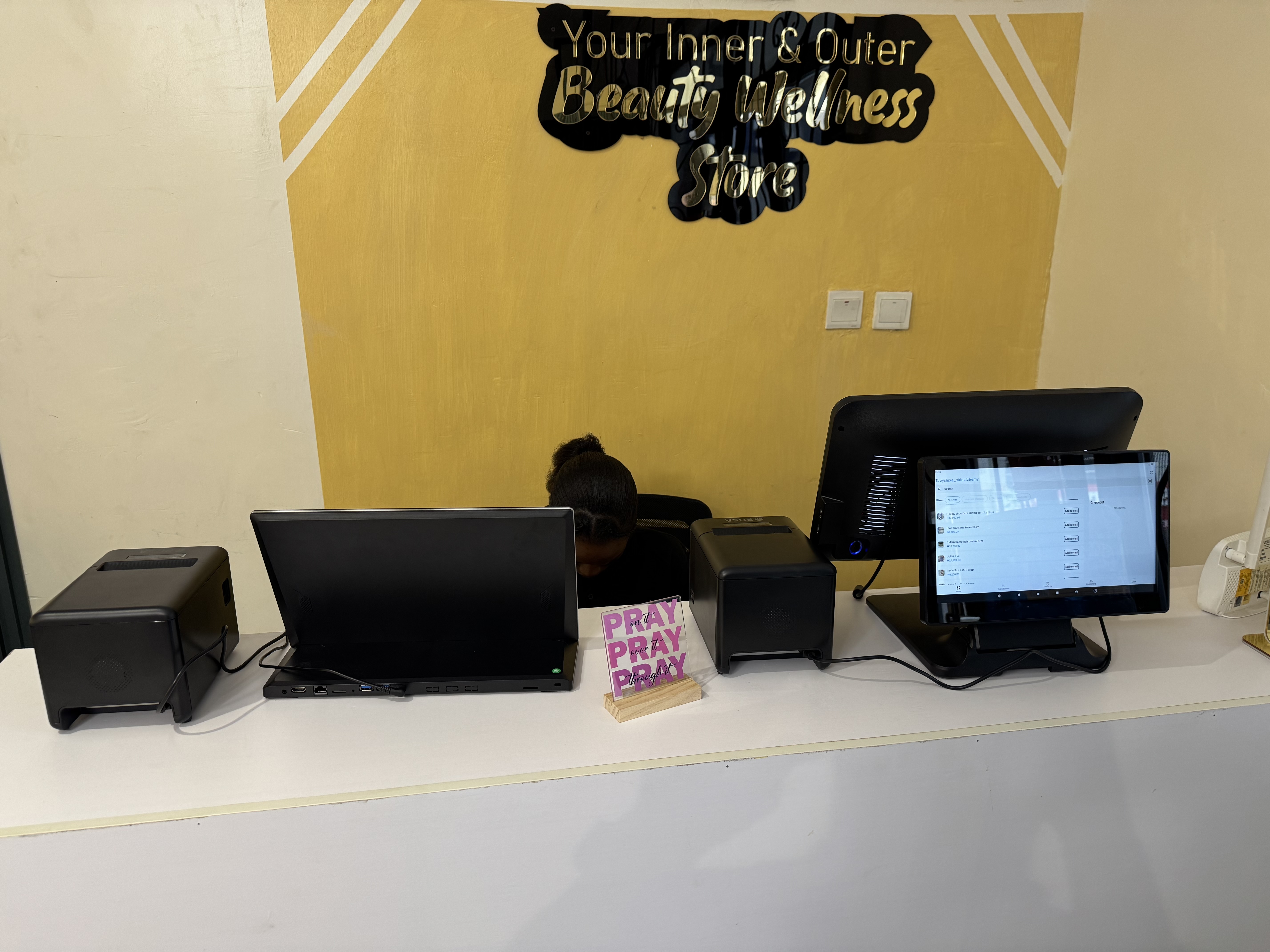
Posa is designed for exactly this situation — a growing business with staff, transactions happening fast, and an owner who needs visibility without being physically present every minute of the day.
- Per-staff sales tracking — every transaction is attributed to a specific team member, with timestamps
- Cash reconciliation — compare expected cash with actual cash at close of business, automatically
- Discount and refund controls — require manager authorisation before overrides are applied
- Real-time dashboard — check today's sales from your phone at any time, from anywhere
- Role-based access — staff see only what they need to see; you see everything
You do not need to watch your staff. You need a system that watches the transactions — and that is exactly what Posa does.
The Bottom Line
Hiring staff is a sign of growth. But growth without structure creates new vulnerabilities — and the businesses that scale successfully are the ones that build systems to match their size.
You do not need to distrust your team. You need tools that make trust verifiable — for your peace of mind, for your profits, and for the good people on your payroll who deserve to be protected just as much as you do.
A system does not replace trust. It makes trust possible at scale.
See how Posa helps shop owners stay in control — with or without being on the floor.
Start your free trial at getposa.com
Get Started FreePublished by Posa Technologies · getposa.com
← More articles