
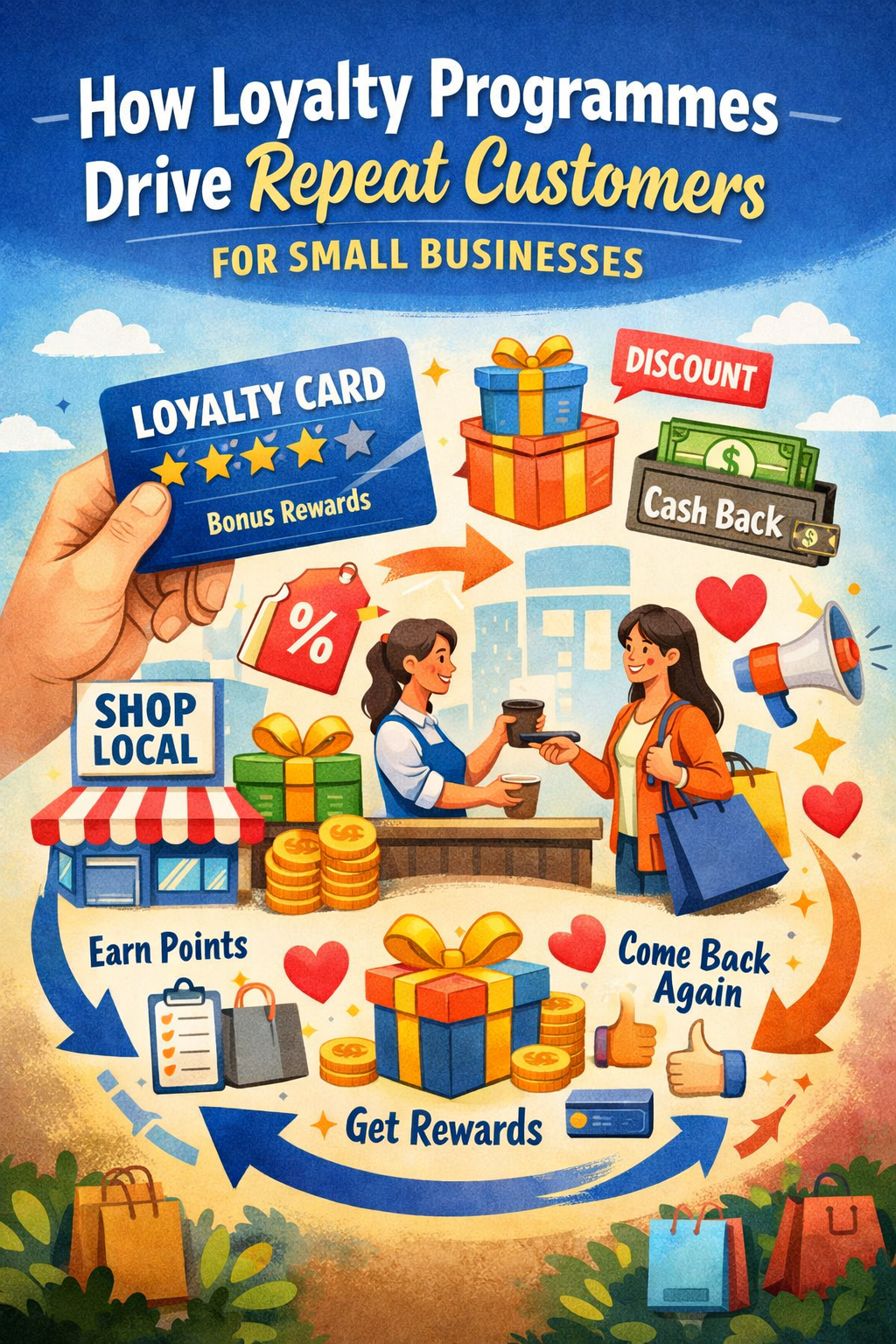
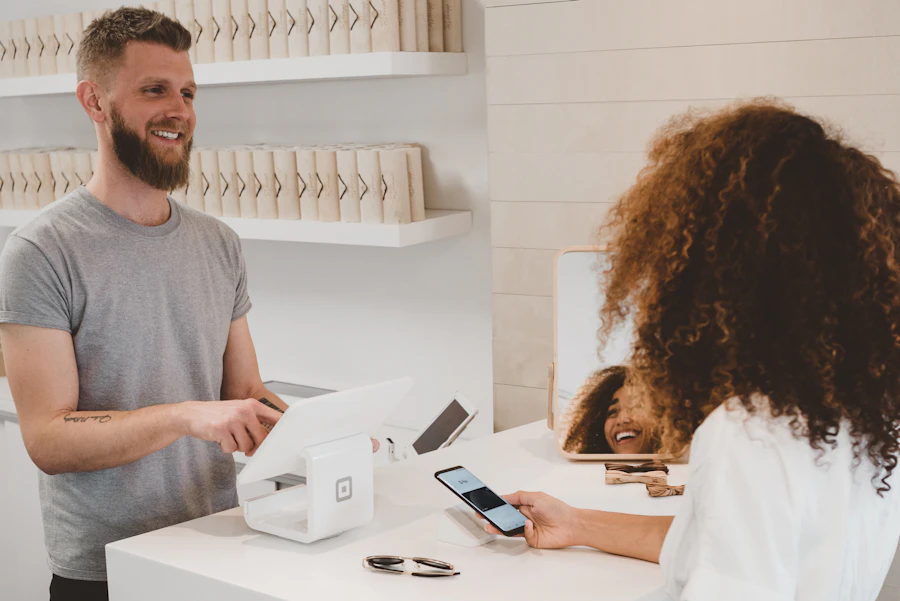
There is a small boutique in Ikeja that does something most shops on the same street do not. Every time a customer buys something, the cashier asks for their name and phone number and records the purchase. When a customer reaches ₦50,000 in total spending, they receive a personal message and a ₦5,000 store credit for their next visit.
The owner started this six months ago using Posa's built-in loyalty feature. Every time a customer makes a purchase, they automatically earn points — and their current points balance prints right on their receipt, so they always know exactly where they stand. She did not run a big campaign. She did not print flyers. She just made her existing customers feel recognised — and let Posa handle the tracking.
Within three months, her repeat customer rate had doubled. Her average transaction value went up because customers were consciously spending more to reach reward thresholds. And she was spending almost nothing on new customer acquisition because her regulars were referring friends.
That is what a well-run loyalty programme looks like in practice. Not a complicated points calculator. Not an expensive marketing campaign. Just a structured, consistent way to make customers feel valued — and a system that makes running it effortless.
Why Repeat Customers Are Your Most Valuable Asset
Attracting a new customer costs significantly more than retaining one you already have. Estimates vary, but most research puts the cost of acquisition at five to seven times higher than retention. For small businesses operating on tight margins in competitive markets like Lagos or Accra, that difference is not just interesting — it is a survival issue.
But the value of repeat customers goes beyond just spending more. A customer who trusts your business:
- Is less sensitive to price — they choose you even when a competitor is slightly cheaper
- Refers others organically — word-of-mouth from a loyal customer is more credible than any advert
- Forgives occasional mistakes — a trusted business gets the benefit of the doubt that a new one does not
A customer who visits your shop once might spend ₦5,000. A loyal customer who returns every two weeks could spend ₦130,000 or more over the course of a year. The difference between those two outcomes is not the quality of your products — it is the relationship you build after the first transaction.
How Loyalty Programmes Actually Drive Repeat Business
1. They Give Customers a Reason to Choose You Again
Without a loyalty programme, every purchase is a standalone decision. The customer weighs convenience, price, and mood — and you have no influence over any of those factors after they leave your shop. With a loyalty programme, you introduce a fourth factor: progress. The customer knows they are building towards a reward. That progress creates a pull back to your business that your competitor cannot easily replicate.
Instead of asking "Where should I shop today?", the loyal customer starts asking "Where can I earn rewards today?" That shift in framing is worth more than most marketing campaigns.
2. They Build an Emotional Connection That Outlasts Any Promotion
A discount anyone can get does not make a customer feel special. A reward that recognises their specific history with your business does. When you acknowledge a customer's birthday, track their purchase milestones, or offer them an exclusive deal based on their buying patterns, you are communicating something no generic promotion can: you notice them, and you value their loyalty specifically.
This emotional dimension is why loyal customers stay even when a competitor offers a lower price. The relationship has value beyond the transaction.
3. They Increase How Much Each Customer Spends Per Visit
Loyalty programmes do not just bring customers back more often — they change how much they spend when they are there. This is one of the most powerful and least discussed effects of a well-designed rewards system.
When a customer knows they are ₦8,000 away from unlocking a reward, they will often add items to their basket to close that gap. When double-points days are running, customers who were planning to visit next week come in today. These are not aggressive sales tactics — they are natural behavioural responses to well-structured incentives.
Small businesses that implement spend-threshold rewards — "Spend ₦15,000 in a single visit to earn double points" or "Unlock a free gift at ₦25,000" — consistently see their average transaction value rise without any additional pressure on their sales staff.
4. They Generate Customer Data You Cannot Get Any Other Way
Every time a loyalty programme member makes a purchase, you learn something. What they bought. When they bought it. How often they come in. What they tend to spend. Over time, this builds a profile of your customer base that is genuinely invaluable — not as abstract data, but as the foundation for smarter business decisions.
With real customer behaviour data, you can:
- Stock products your best customers actually want, not what you think they want
- Run targeted promotions to specific customer segments at the right time
- Identify customers who have not visited in a while and reach out before you lose them permanently
Most small businesses in Nigeria and Ghana have no reliable customer data at all — because they have no system for collecting it. A loyalty programme, properly implemented, solves that problem as a side effect of rewarding customers.
Why Most Small Businesses Have Not Done This Yet
If loyalty programmes are this effective, why are so few small businesses in Nigeria and Ghana running them properly? The honest answer is that most attempts at manual loyalty tracking collapse quickly.
- Stamp cards get lost or forgotten by both customers and staff
- Notebooks and spreadsheets are time-consuming to maintain and easy to get wrong
- Inconsistent application of rewards damages customer trust rather than building it
- Without data, there is no way to know if the programme is actually working
The barrier is not willingness. It is the lack of a system that makes running a loyalty programme as easy as running any other part of the business. That is exactly what Posa solves.
How Posa Makes Loyalty Programmes Effortless

Posa has a built-in loyalty programme feature that is directly integrated with your point of sale — meaning rewards are tracked and applied automatically, with no manual effort from your staff and no friction for your customers.
- Automatic points on every purchase — customers earn rewards without your cashier doing anything extra
- Customer purchase history — see what each customer buys, how often they visit, and how much they spend over time
- Flexible reward structures — configure points, cashback, discounts, or spend-threshold rewards to match your business model
- Seamless at checkout — loyalty rewards apply during the normal sales flow with no extra steps or separate systems
The boutique owner in Ikeja who doubled her repeat customer rate? She runs her loyalty programme entirely through Posa. No spreadsheets. No stamp cards. No manual calculations. Just a system that tracks, rewards, and reports — automatically.
Four Tips for Running a Loyalty Programme That Actually Works
Even with the right system, there are a few principles that separate loyalty programmes that deliver results from ones that fizzle out:
- Keep it simple. Customers should be able to understand how to earn and redeem rewards in one sentence. If it takes a pamphlet to explain, simplify it.
- Make rewards achievable. A reward that takes 18 months to earn will not change anyone's behaviour. Set thresholds that a regular customer can realistically reach within a few weeks.
- Tell every customer. Do not assume customers will discover your loyalty programme on their own. Train your staff to mention it at every checkout — especially to first-time customers.
- Be consistent. Nothing damages a loyalty programme faster than applying rewards inconsistently. Customers who feel the rules are arbitrary quickly lose trust. A system that handles this automatically removes the human error entirely.
The Bottom Line
The most expensive customer your business will ever acquire is the one who visited once and never came back. Not because they had a bad experience — but because nothing pulled them back. No recognition, no reward, no reason to choose you over the next option.
A loyalty programme changes that equation. It gives customers a reason to return, a reason to spend more when they do, and a reason to bring others with them. For small businesses competing in dense markets like Lagos, Abuja, or Accra, that sustained pull is one of the most powerful growth tools available.
Your competitors are competing for new customers. You could be building a base of loyal ones that they cannot take from you.
Start building customer loyalty from your very first sale with Posa.
Try it free at getposa.com
Get Started FreePublished by Posa Technologies · getposa.com
← More articles